AOD-9604
Also known as: aod9604, aod 9604, anti-obesity drug 9604
C-terminal fragment of hGH studied for lipolysis and fat-burning without IGF-1 elevation.
Quick Reference
AOD-9604 - Research Images
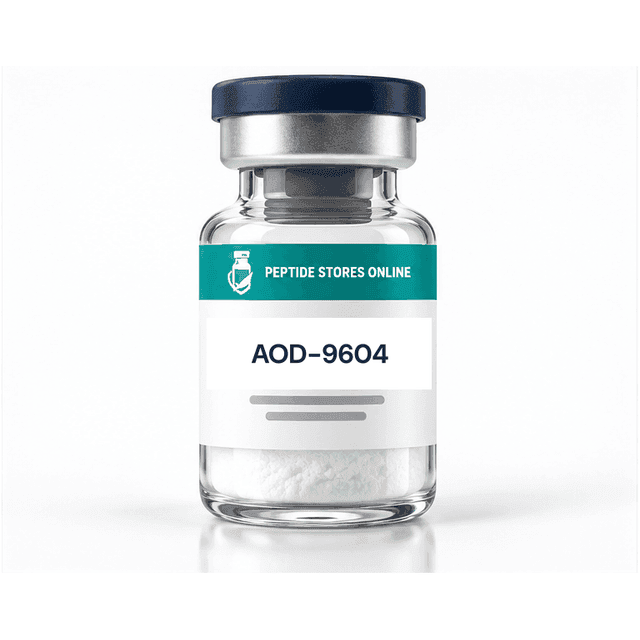
PSO vial render · Scientific images from Wikipedia · Tap to enlarge
Overview

Orally active, lipolytic fragment of human growth hormone
AOD9604 is an orally active, lipolytic 16-amino acid peptide fragment of human growth hormone and derivative of the C-terminal domain of human growth hormone (HGH). It consists of HGH residues 176–191, with a tyrosine in place of the phenylalanine at the N-terminal end. Initial human trials showed that it retains the lipolytic properties of human growth hormone without stimulating IGF-1 production. However, later studies failed to demonstrate a sufficient lipolytic effect. Its development was terminated in 2007. Despite its limited efficacy, AOD9604 is still banned in athletes and tested for in competition.
Mechanism of Action
Mimics the lipolytic action of HGH C-terminus, activates beta-3 adrenergic receptors in adipose tissue.
What is AOD-9604?
AOD-9604 is a modified fragment of human growth hormone, built from the exact region (amino acids 176-191) that scientists identified as the hormone's fat-burning zone. Researchers study it because it appears to trigger fat breakdown in laboratory and clinical research without the blood-sugar side effects of full growth hormone.
How It Works - Simply Explained
AOD-9604 zeroes in on fat cells. It stimulates lipolysis - the breakdown of stored fat into usable fuel - while blocking lipogenesis, the process that builds new fat stores. Unlike full growth hormone, it does this without raising blood sugar or boosting IGF-1 levels, because the fragment was engineered to keep only the fat-targeting instructions and leave the rest of the hormone's effects behind.
What Studies Have Found
Pinpointing the fat-burning zone
Scientists spent years mapping exactly which part of growth hormone burns fat, and the answer turned out to be a small tail section spanning amino acids 176 to 191. AOD-9604 is a chemically modified, stabilized version of that fragment - essentially the fat-loss chapter of growth hormone torn out and bound as its own booklet.
Ng FM et al., published growth hormone fragment research, early 2000s endocrinology literature
Fat breakdown up, fat storage down
In fat-cell and animal studies, the 176-191 fragment did two things at once: it ramped up the release of stored fat (lipolysis) and suppressed the machinery that builds new fat (lipogenesis). Crucially, blood glucose stayed flat - the fragment showed none of the blood-sugar-raising behavior that makes full growth hormone tricky to work with.
Published lipolysis research on the human growth hormone 176-191 fragment
Tested in people: modest loss, clean safety sheet
AOD-9604 went further than most research peptides: it was tested in a 24-week randomized, double-blind, placebo-controlled trial in obese adults. The result was modest but statistically significant weight loss versus placebo, with good tolerability and no adverse effects on blood sugar or insulin - exactly the profile the fragment was designed for.
Stier H et al., 2013, published clinical trial results on AOD9604 in obese adults
A surprise second act: cartilage
Separate research uncovered an unexpected talent: AOD-9604 encouraged cartilage cell growth and repair in laboratory models of osteoarthritis. Scientists are now studying whether the same fragment that trims fat might also help rebuild worn joint tissue - a completely different therapeutic frontier for the same small peptide.
Published osteoarthritis and cartilage regeneration research on AOD-9604
Last updated 2026-10-06. New findings are added as published research appears.
Frequently Asked Questions
What is AOD-9604?
AOD-9604 is a synthetic peptide fragment made from amino acids 176-191 of human growth hormone, chemically modified for stability. It was developed to isolate the fat-metabolism effects of growth hormone. It is sold strictly for laboratory research use and is not approved for human consumption.
How is AOD-9604 different from HGH?
Full human growth hormone affects the whole body - muscle growth, blood sugar, IGF-1 levels, organ growth. AOD-9604 contains only the small tail region responsible for fat metabolism, so in research it triggers fat breakdown without raising blood sugar or IGF-1. Researchers consider it a far more targeted tool for fat-metabolism studies.
What did the human clinical trial find?
A 24-week randomized controlled trial in obese adults (published 2013) found AOD-9604 produced modest but statistically significant weight loss compared to placebo. The standout result was safety: no negative effects on blood glucose or insulin sensitivity, which had been the main concern with growth-hormone-based approaches.
Does AOD-9604 affect blood sugar?
In published research, no. Unlike full growth hormone, which can raise blood sugar and reduce insulin sensitivity, AOD-9604 showed no adverse glycemic effects in either animal studies or the human clinical trial. Avoiding that side effect was the entire reason the fragment was developed.
What does research say about AOD-9604 and joints?
Laboratory studies found AOD-9604 stimulated cartilage cell proliferation in osteoarthritis models, suggesting potential for joint-tissue repair research. This is a separate line of investigation from its fat-metabolism work and is still at the preclinical stage.
Is AOD-9604 approved by the FDA?
No. AOD-9604 is not an FDA-approved drug, despite having completed a human clinical trial. It remains a research chemical for laboratory use only.
Why do researchers prefer the fragment over full growth hormone?
Precision. Full growth hormone is a blunt instrument with system-wide effects including blood-sugar disruption. The 176-191 fragment lets researchers study fat metabolism in isolation - turning the fat-burning dial without touching glucose control, IGF-1, or growth pathways.
What Researchers Are Saying
Community Reports - Not Medical Advice
The following is aggregated from public forums, Reddit, and research communities. These are anecdotal reports from researchers only - not verified clinical data and not a recommendation of any kind.
AOD-9604 (also known as aod9604, aod 9604) is studied within the growth hormone axis and body composition research community. C-terminal fragment of hGH studied for lipolysis and fat-burning without IGF-1 elevation.
Last updated October 28, 2026
Research status: active. AOD-9604 appears across growth hormone axis and body composition research forums and academic literature. Researchers note this compound falls in the growth hormone category.
Last updated October 28, 2026
What Do You Think of This Peptide?
Share your opinion or research experience with AOD-9604. Comments are reviewed before appearing.