BPC-157
Also known as: bpc157, bpc 157, body protection compound, body protection compound 157, pentadecapeptide bpc 157
Synthetic pentadecapeptide derived from gastric juice studied for tendon, ligament, and gut healing.
Quick Reference
BPC-157 - Research Images
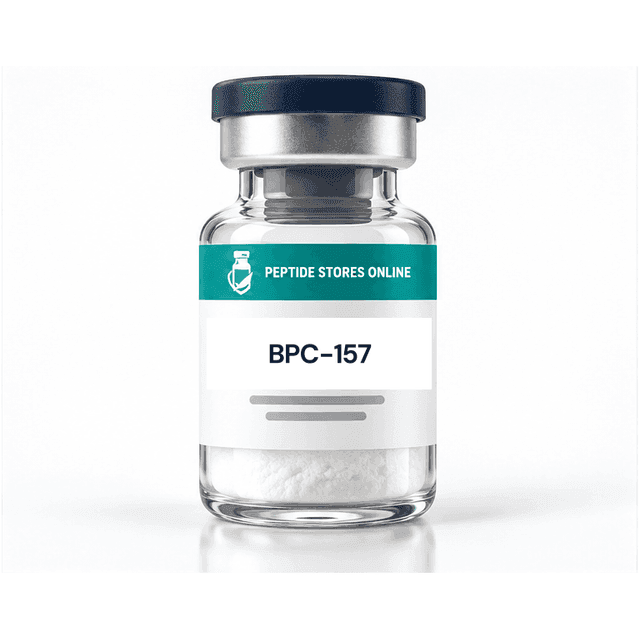
PSO vial render · Scientific images from Wikipedia · Tap to enlarge
Overview

Peptide
Gastric pentadecapeptide BPC-157 is a synthetic fifteen amino acid oligopeptide derived from a protein found in human gastric juice. BPC-157 has been studied primarily in laboratory animals. BPC-157 is not approved by any drug regulatory agency for human use, and there is limited data regarding its effectiveness on humans.
Mechanism of Action
Upregulates growth hormone receptors, promotes angiogenesis via VEGFR2, stabilizes nitric oxide pathways, and activates FAK-paxillin pathway for cellular repair.
What is BPC-157?
BPC-157 is a synthetic peptide made of 15 amino acids, modeled on a protective protein found in human stomach fluid. Researchers study it mainly for tissue repair, especially tendons, ligaments, muscles, and the gut lining. In animal studies it has shown remarkably broad healing effects, which is why it became one of the most talked-about research peptides in the world.
How It Works - Simply Explained
Scientists think BPC-157 works by supporting several of the body's natural repair systems at once. In lab studies it encouraged new blood vessel growth, interacted with growth-factor pathways that guide tissue rebuilding, and protected cells lining the gut. It also appears to influence nitric oxide signaling, which helps regulate blood flow to injured areas. Researchers describe it as unusually broad-acting, which is why so many different tissues have been studied.
What Studies Have Found
Torn tendons healed stronger in rats
Researchers severed the Achilles tendon in rats, then treated some with BPC-157. The treated tendons developed better-organized collagen fibers and withstood significantly more pulling force before rupturing again. For tendon researchers, this 2003 experiment remains one of the most striking demonstrations of a peptide accelerating structural repair.
Staresinic M, et al., 2003, Journal of Orthopaedic Research
Shielded the stomach lining from severe damage
In early lab work, scientists injured rat stomachs with alcohol and with NSAID painkillers, two standard ways to create ulcers in research. Animals given BPC-157 developed far fewer lesions. These gut-protection experiments from the 1990s are where BPC-157 research began, and the compound is named for this body-protection effect.
Sikiric P, et al., 1990s, Inflammopharmacology
Encouraged new blood vessel growth
Healing tissue needs fresh blood supply, and cell studies found BPC-157 promotes the formation of new vessels by interacting with pathways that control vessel growth. In lab-grown human vessel cells, the peptide increased markers of angiogenesis. Researchers see this as a core reason it helps so many tissue types.
Hsieh MJ, et al., 2017, Journal of Cellular Physiology
Showed protective effects on nerves and the brain
Animal studies explored BPC-157 beyond muscles and gut, finding it counteracted damage in nerve-injury models and showed protective signals in the central nervous system. Reviewers have described an intriguing gut-brain connection in this research. The work is still early and entirely preclinical, but it keeps neuroscientists interested.
Sikiric P, et al., 2017, Current Neuropharmacology
Last updated 2026-10-06. New findings are added as published research appears.
Frequently Asked Questions
What is BPC-157?
BPC-157 is a synthetic peptide of 15 amino acids, modeled on a protective protein found in human digestive fluid. It is sold strictly as a research chemical for laboratory studies, most famously in tendon, muscle, and gut-lining repair research.
What have studies found about BPC-157?
Published animal research reports faster tendon and muscle healing, protection of the stomach lining against ulcer-causing agents, new blood vessel formation, and protective effects in nerve-injury models. Human clinical data is very limited, so findings come almost entirely from preclinical studies.
What is the difference between BPC-157 and TB-500?
Both are studied for tissue repair, but they come from different places: BPC-157 is modeled on a stomach protein, while TB-500 is a fragment of thymosin beta-4, a protein found in nearly every cell. Researchers often study them side by side because their repair mechanisms appear complementary.
Has BPC-157 been tested in humans?
Only in very limited early clinical work. Nearly all published findings come from animal and cell studies, which is why it remains a research chemical rather than an approved medicine.
Is BPC-157 legal to buy?
It is sold legally as a research chemical for laboratory use only, not for human consumption. It is not an FDA-approved drug, and regulations vary by country, so researchers should check local rules.
Why is BPC-157 so popular in research?
Few peptides show such a broad range of repair effects across tendons, muscles, gut, blood vessels, and nerves in animal models. That breadth, plus a long publication history going back to the 1990s, made it a staple of tissue-repair research.
How is BPC-157 stored?
Suppliers typically ship it as a freeze-dried powder and recommend cold, dry storage to preserve stability. Exact storage guidance comes from the supplier's certificate of analysis and product documentation.
FDA News About This Compound
HPLC Purity Versus Net Peptide Content: What the Numbers on a COA Mean
HPLC purity versus net peptide content: what the two numbers on a peptide certificate of analysis mean, how each is measured, why they use d...
Read article →
How to Compare Research Peptide Vendors: A Buyer's Checklist
How to compare research peptide vendors: a buyer's checklist covering lot-matched certificates of analysis, testing evidence, delivered pric...
Read article →
Lyophilized Peptide Storage: What Published Research and Vendor Data Sheets Actually Say
Lyophilized peptide storage explained: what published research and vendor data sheets say about temperature, moisture, light, shelf life, an...
Read article →
What Researchers Are Saying
Community Reports - Not Medical Advice
The following is aggregated from public forums, Reddit, and research communities. These are anecdotal reports from researchers only - not verified clinical data and not a recommendation of any kind.
BPC-157 (also known as bpc157, bpc 157) is studied within the tissue repair and recovery research community. Synthetic pentadecapeptide derived from gastric juice studied for tendon, ligament, and gut healing.
Last updated October 28, 2026
Research status: active. BPC-157 appears across tissue repair and recovery research forums and academic literature. Researchers note this compound falls in the tissue repair category.
Last updated October 28, 2026
What Do You Think of This Peptide?
Share your opinion or research experience with BPC-157. Comments are reviewed before appearing.