Hexarelin
Also known as: examorelin, EP-23905, MF-6003, hexarelin acetate
Potent synthetic hexapeptide ghrelin mimetic studied for GH secretion and cardioprotection.
Quick Reference
Hexarelin - Research Images
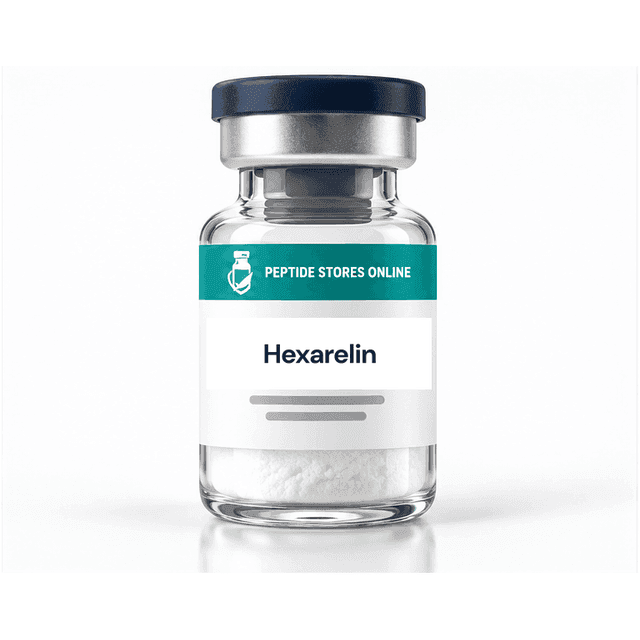
PSO vial render · Scientific images from Wikipedia · Tap to enlarge
Overview

Chemical compound
Examorelin (INN; also known as hexarelin; developmental codes EP-23905 and MF-6003) is a potent, synthetic, peptidic, orally-active, centrally-penetrant, and highly selective agonist of the ghrelin/growth hormone secretagogue receptor (GHSR) and a growth hormone secretagogue which was developed by Mediolanum Farmaceutici. It is a hexapeptide with the amino acid sequence His-D-2-methyl-Trp-Ala-Trp-D-Phe-Lys-NH2 which was derived from GHRP-6. These GH-releasing peptides have no sequence similarity to ghrelin, but mimic ghrelin by acting as agonists at the ghrelin receptor.
Mechanism of Action
Examorelin (INN; also known as hexarelin; developmental codes EP-23905 and MF-6003) is a potent, synthetic, peptidic, orally-active, centrally-penetrant, and highly selective agonist of the ghrelin/growth hormone secretagogue receptor (GHSR) and a growth hormone secretagogue which was developed by Mediolanum Farmaceutici. It is a hexapeptide with the amino acid sequence His-D-2-methyl-Trp-Ala-Trp-D-Phe-Lys-NH2 which was derived from GHRP-6. These GH-releasing peptides have no sequence similarity to ghrelin, but mimic ghrelin by acting as agonists at the ghrelin receptor.
What is Hexarelin?
Hexarelin is a synthetic six-amino-acid peptide, a stronger and more stable cousin of GHRP-6. It activates the ghrelin receptor to prompt growth hormone release. Researchers study it for that hormone signal and, unusually, for direct protective effects on the heart observed in animal studies independent of growth hormone.
How It Works - Simply Explained
Hexarelin switches on the growth hormone secretagogue receptor, the ghrelin receptor, in the pituitary, prompting growth hormone release. What makes it distinctive in research is a second story: heart tissue carries both that receptor and another receptor called CD36, and hexarelin interacts with both. In animal studies, heart protection appeared even when growth hormone itself did not explain the effect, suggesting a direct action on heart cells alongside the hormone signal.
What Studies Have Found
Potent growth hormone release shown in human research
Early human studies found hexarelin was a powerful trigger of growth hormone release, and follow-up comparative work examined its effects on growth hormone alongside smaller rises in prolactin, ACTH, and cortisol. That full hormone picture is why researchers treat hexarelin as strong but less selective than later secretagogues such as ipamorelin.
Imbimbo BP et al., 1994, European Journal of Clinical Pharmacology; Arvat E et al., 1997, Peptides
Heart function improved after heart attack in rats
In rats recovering from an experimentally induced heart attack, researchers reported hexarelin improved measures of heart pumping function and reduced resistance in the circulation, to a similar degree as growth hormone itself in the same study. Body weight patterns differed between the two treatments, hinting the heart effect was not simply a copy of growth hormone action.
Tivesten A et al., research on hexarelin after myocardial infarction in rats, Endocrinology
Protected heart muscle from ischemia and reperfusion injury
In a rat model where blood flow to the heart was temporarily blocked and then restored, hexarelin treatment improved heart function, lowered a marker of oxidative damage, and left more heart muscle cells alive. Researchers linked the protection in part to calming interleukin-1 inflammatory signaling through the cardiac ghrelin receptor, since blocking that receptor removed the benefit.
Ma Y et al., 2018, International Heart Journal, research on hexarelin and ischemia reperfusion injury
Heart protection in growth hormone-deficient animals
In rats made growth hormone deficient, heart preparations handled low blood flow and reperfusion poorly. Hexarelin treatment in that model restored hormone function and counteracted much of the heart damage, improving recovery of pumping pressure. Control animals given hexarelin also showed better post-ischemic heart function, again pointing to effects beyond simply replacing growth hormone.
De Gennaro Colonna V et al., research on hexarelin and myocardial ischemia in GH-deficient rats, Endocrinology
Review concluded the heart story is real but still preclinical
A scientific review of hexarelin's cardiovascular research concluded it shows protective activity across cardiac fibrosis, ischemic heart disease, and heart dysfunction models, likely through its two heart receptors. The reviewers were clear that the evidence comes mainly from animal and cell studies, and that human clinical trials would be needed before any medical conclusion could be drawn.
Mao Y et al., 2014, review of the cardiovascular action of hexarelin, PMC4178518
Last updated 2026-10-12. New findings are added as published research appears.
Frequently Asked Questions
What is hexarelin?
Hexarelin is a synthetic hexapeptide, meaning a short peptide of six amino acids, developed as a modified, more potent relative of GHRP-6. It activates the ghrelin receptor in research models and is sold strictly for laboratory research use, not for human consumption.
How is hexarelin different from GHRP-6?
Hexarelin carries a chemical modification to one building block that makes it more potent and more resistant to breakdown in research models. GHRP-6 is the older parent compound and is most associated with hunger signaling studies; hexarelin is most associated with growth hormone potency and heart research.
Why do heart researchers study hexarelin?
Because in animal models it protected heart muscle during blocked and restored blood flow, improved pumping measures after heart injury, and appeared to do so partly through receptors on heart cells themselves, not only through growth hormone. Those findings are preclinical and have not been established in human trials.
How is hexarelin different from ipamorelin?
Both activate the ghrelin receptor pathway to prompt growth hormone release in research. Hexarelin is older, more potent, and less selective, with measurable effects on other hormones in human research. Ipamorelin was developed later specifically for selectivity. Their research focuses differ accordingly.
Has hexarelin been tested in humans?
Yes, in early human research mainly measuring hormone release. It was not developed into an approved medicine, and its heart findings come almost entirely from animal and cell studies. Material sold here is for laboratory research only.
What is CD36 and why does it matter for hexarelin?
CD36 is a receptor found on heart and other cells that handles fatty-acid uptake and cell signaling. Researchers found hexarelin also interacts with CD36 in the heart, which may help explain heart effects that growth hormone alone did not reproduce in some animal studies.
What Researchers Are Saying
Community Reports - Not Medical Advice
The following is aggregated from public forums, Reddit, and research communities. These are anecdotal reports from researchers only - not verified clinical data and not a recommendation of any kind.
Hexarelin (also known as examorelin, EP-23905) is studied within the growth hormone axis and body composition research community. Potent synthetic hexapeptide ghrelin mimetic studied for GH secretion and cardioprotection.
Last updated October 28, 2026
Research status: active. Hexarelin appears across growth hormone axis and body composition research forums and academic literature. Researchers note this compound falls in the growth hormone category.
Last updated October 28, 2026
What Do You Think of This Peptide?
Share your opinion or research experience with Hexarelin. Comments are reviewed before appearing.