Melittin
Also known as: bee venom melittin, MEL
Melittin is a 26 amino acid peptide and the chief toxin found in bee venom. Various forms are recorded in UniProt from several bee species, including Apis florea under accession P01504, with a mass near 2819.44 daltons. Research focuses on its membrane disrupting characteristics and its role as a pain producing signal, along with its blood cell breaking and antimicrobial effects in experimental settings.
Quick Reference
Melittin - Research Images
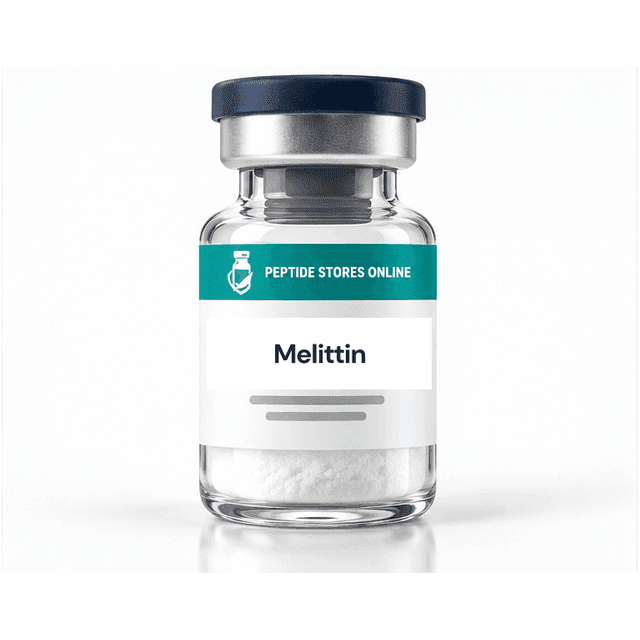
PSO vial render · Scientific images from Wikipedia · Tap to enlarge
Overview

Protein family
Melittin is the main component and the major pain-producing substance of honeybee venom. Melittin is a basic peptide consisting of 26 amino acids.
Mechanism of Action
Melittin is amphipathic, having both water friendly and fat friendly sides. It binds to negatively charged membrane surfaces and inserts into lipid bilayers, forming pores that allow ions and small molecules to leak until the cell breaks open. These pores pass anions more readily than cations and their conductance varies with voltage, and melittin also raises the activity of bee venom phospholipase A2.
Research History
Melittin from different bee species, such as Apis mellifera, Apis dorsata, and Apis cerana, is cataloged in addition to the Apis florea entry. It has long been the standard reference compound in bee venom studies, given its status as the venom's principal active component.
What Researchers Are Saying
Community Reports - Not Medical Advice
The following is aggregated from public forums, Reddit, and research communities. These are anecdotal reports from researchers only - not verified clinical data and not a recommendation of any kind.
Melittin (also known as bee venom melittin, MEL) is studied within the antimicrobial and infection research community. Primary cytolytic component of bee venom studied for membrane-disrupting antimicrobial properties and cancer research.
Last updated October 28, 2026
Research status: active. Melittin appears across antimicrobial and infection research forums and academic literature. Researchers note this compound falls in the antimicrobial category.
Last updated October 28, 2026
What Do You Think of This Peptide?
Share your opinion or research experience with Melittin. Comments are reviewed before appearing.