MOTS-c
Also known as: mots c, mitochondrial open reading frame of the 12S rRNA-c, mitochondrial peptide mots-c, mitochondrial ORF of 12S rRNA, MOTS-C peptide
Mitochondria-encoded peptide studied for metabolic regulation, insulin sensitivity, and exercise mimicry.
Quick Reference
MOTS-c - Research Images
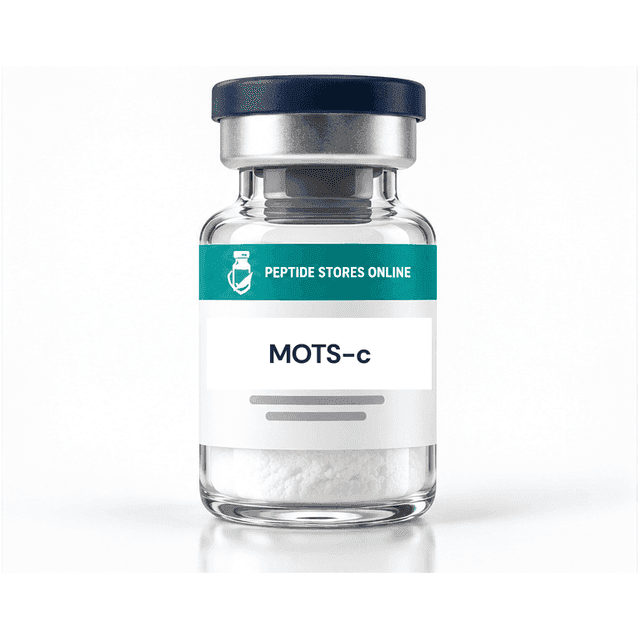
PSO vial render · Scientific images from Wikipedia · Tap to enlarge
Overview

Peptide encoded in mitochondrial DNA
MOTS-c is a 16-amino-acid peptide that in humans is encoded by the mitochondrial MT-RNR1 gene, with the amino acid sequence MRWQEMGYIFYPRKLR. It is believed to be involved in regulating metabolism of glucose by skeletal muscle tissue. It is upregulated in response to exercise, and is considered an exercise mimetic, as well as having other potential medical applications.
Mechanism of Action
MOTS-c is a 16-amino-acid peptide that in humans is encoded by the mitochondrial MT-RNR1 gene, with the amino acid sequence MRWQEMGYIFYPRKLR. It is believed to be involved in regulating metabolism of glucose by skeletal muscle tissue. It is upregulated in response to exercise, and is considered an exercise mimetic, as well as having other potential medical applications.
What is MOTS-c?
MOTS-c is a 16-amino-acid peptide made inside mitochondria - the tiny power plants in your cells - from a special stretch of mitochondrial DNA. Discovered in 2015, researchers study it as a metabolic messenger: in animal studies it improved how muscles use sugar, reduced fat buildup, and boosted exercise endurance.
How It Works - Simply Explained
MOTS-c acts like a status report from your mitochondria to the rest of the cell. When energy runs low, mitochondria release more MOTS-c, which travels mainly to muscle tissue and flips on AMPK - the cell's master energy sensor. AMPK then tells muscles to pull in more glucose from the blood and burn fat more efficiently. MOTS-c also nudges the folate and methionine cycles, reprogramming how cells build the molecules they need during metabolic stress.
What Studies Have Found
The mitochondrial peptide that fought obesity in mice
In the landmark 2015 discovery paper, researchers showed that MOTS-c treatment prevented obesity in mice fed a high-fat diet and made their bodies respond to insulin far better. The peptide homed in on skeletal muscle, switched on the AMPK energy pathway, and measurably improved how the animals handled sugar.
Lee C et al., 2015, Cell Metabolism, PMID 25738459
An endurance boost from the powerhouse
Follow-up studies found that mice given MOTS-c could run longer and showed better physical performance, with their muscles adapting as if they had been training. Researchers linked this to MOTS-c's role as an exercise-responsive signal - the kind of finding that made sports-metabolism scientists sit up straight.
Kim KH and colleagues, published MOTS-c exercise and metabolism research
Rewiring the cell's building plans
Deeper metabolic analysis revealed that MOTS-c does not just flip one switch - it reprograms the cell's chemistry. Treated cells ramped up the folate-methionine cycle and purine production, changing how they manufacture the raw materials needed under stress. It was a far bigger metabolic footprint than anyone expected from a 16-amino-acid peptide.
Lee C et al., 2015, Cell Metabolism, PMID 25738459
A human gene variant tied to diabetes risk
Researchers studying human genetics found a natural variant in the MOTS-c gene region (m.1382A>C) associated with a higher risk of type 2 diabetes in human populations. This was a big deal: it suggested MOTS-c is not just a mouse curiosity but a player in human metabolic health too.
Reynolds JC et al., 2021, Nature Communications
Exercise raises it in people
Human studies found that MOTS-c levels rise in skeletal muscle after exercise, and that circulating levels track with markers of metabolic health. In other words, the peptide behaves in people the way the mouse research predicted - a stress-responsive messenger that shows up when the body needs metabolic backup.
Published human exercise physiology research on mitochondrial-derived peptides
New finding added 2026-10-12: Shielded retinal blood vessels in diabetic models
In a study published on 10 October 2026, researchers found that high sugar lowered MOTS-c in retinal vessel cells, and that restoring MOTS-c in cell culture and in diabetic mice protected the blood-retinal barrier and improved mitochondrial function. The protection depended on an enzyme called PLA2G6 that helps clear harmful oxidized fats from cell membranes: when researchers blocked that enzyme, the benefit largely disappeared. This is early cell and animal work, not human evidence.
Liao Y et al., 2026, Cell Death Discovery
Last updated 2026-10-12. New findings are added as published research appears.
Frequently Asked Questions
What is MOTS-c?
MOTS-c (mitochondrial open reading frame of the 12S rRNA-c) is a 16-amino-acid peptide encoded by mitochondrial DNA, discovered in 2015. It is one of a small family of mitochondrial-derived peptides that act as metabolic messengers. It is sold strictly for laboratory research use and is not approved for human consumption.
What did the 2015 discovery study find?
The Cell Metabolism paper by Lee and colleagues showed MOTS-c prevented diet-induced obesity in mice, improved insulin sensitivity, activated the AMPK energy pathway in muscle, and reprogrammed cellular metabolism. It was the first proof that mitochondria send peptide signals that regulate whole-body metabolism.
How is MOTS-c different from other metabolic peptides?
Most metabolic research peptides mimic gut hormones (like GLP-1 agonists) or growth hormone fragments (like AOD-9604). MOTS-c is unique because it comes from mitochondrial DNA and works primarily through the AMPK energy-sensing pathway in muscle - a completely different control system for metabolism.
Does MOTS-c really improve exercise performance?
In animal studies, yes - treated mice showed greater running endurance and muscle adaptation. Human studies show MOTS-c rises naturally with exercise. But these are research findings in models and observational human data, not proof of performance effects in people, and it remains a research compound only.
What is the MOTS-c gene variant linked to diabetes?
Researchers identified a mitochondrial DNA variant (m.1382A>C) in the MOTS-c coding region that changes one amino acid in the peptide. People carrying this variant showed higher type 2 diabetes risk in population studies (Reynolds et al., 2021), which strengthened the case that MOTS-c matters for human metabolic health.
Is MOTS-c approved for human use?
No. MOTS-c is not an FDA-approved drug. Early-stage human safety research on MOTS-c analogs has been reported, but it remains a research chemical for laboratory use only.
Why is MOTS-c called a mitochondrial-derived peptide?
Because it breaks the textbook rule. For decades scientists believed mitochondrial DNA only made proteins for the energy-production machinery. MOTS-c proved mitochondria also manufacture small signaling peptides that travel to other tissues - opening up a whole new field of mitochondrial communication research.
FDA News About This Compound
What Researchers Are Saying
Community Reports - Not Medical Advice
The following is aggregated from public forums, Reddit, and research communities. These are anecdotal reports from researchers only - not verified clinical data and not a recommendation of any kind.
MOTS-c (also known as mots c, mitochondrial open reading frame of the 12S rRNA-c) is studied within the mitochondrial health and energy research community. Mitochondria-encoded peptide studied for metabolic regulation, insulin sensitivity, and exercise mimicry.
Last updated October 28, 2026
Research status: emerging. MOTS-c appears across mitochondrial health and energy research forums and academic literature. Researchers note this compound falls in the mitochondrial category.
Last updated October 28, 2026
What Do You Think of This Peptide?
Share your opinion or research experience with MOTS-c. Comments are reviewed before appearing.