Semax
Also known as: semax peptide, ACTH 4-7 PGP, acth 4-7 pgp, heptapeptide semax
ACTH-derived heptapeptide studied for neuroprotection, cognitive enhancement, and BDNF upregulation.
Quick Reference
Semax - Research Images
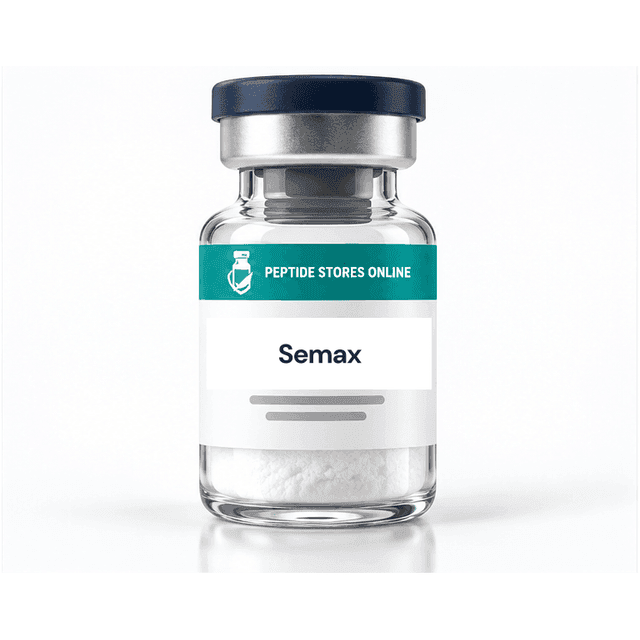
PSO vial render · Scientific images from Wikipedia · Tap to enlarge
Overview

Chemical compound
Semax, an abbreviation of "seven amino acids", is a medication which is used in Eastern Europe for the treatment of a broad range of conditions like brain trauma but predominantly for its claimed nootropic, neuroprotective, and neurorestorative effects.
Mechanism of Action
Stimulates BDNF and NGF expression, modulates dopamine and serotonin systems, neuroprotective via antioxidant pathways.
What is Semax?
Semax is a synthetic seven-amino-acid peptide developed in Russia from a fragment of ACTH, a natural stress-hormone signal. For decades, Russian researchers have studied it for brain support: laboratory and clinical research links it to sharper focus, better memory, and protection of brain cells in models of stroke and oxygen shortage.
How It Works - Simply Explained
Semax works on several brain systems at once. It raises levels of BDNF - a protein that helps brain cells grow, connect, and survive - and tunes up the brain's dopamine and serotonin signaling, which sharpens attention and mood. In stroke models, it switches on protective genes that help brain tissue survive oxygen loss. Think of it as a multi-tool for the brain: growth support, sharper signaling, and emergency defense.
What Studies Have Found
Turning up the brain's fertilizer
Researchers discovered that Semax increases expression of BDNF and nerve growth factor in the brain - proteins that keep neurons healthy and help them form new connections. BDNF is often called fertilizer for the brain, and boosting it is one of the most sought-after effects in neuroscience research.
Dolotov OV et al., published research on Semax and neurotrophin expression, Doklady Biochemistry and Biophysics
Shielding the brain during stroke
In animal models of cerebral ischemia (stroke), Semax reduced the area of damaged brain tissue and improved functional recovery. These striking neuroprotective results are why Russian clinicians went on to study Semax in human stroke patients - one of the few research peptides with that kind of clinical history.
Gusev EI, Skvortsova VI and colleagues, published Russian stroke research on Semax
Sharper minds in human studies
Russian clinical research reported improved attention, memory, and mental performance in patients receiving Semax, including people recovering from brain circulation disorders. Unlike stimulants, the cognitive lift came without jitters or crashes - a clean, focused kind of sharpness that made researchers take notice.
Published Russian clinical studies on Semax and cognitive function
Reprogramming protective genes
Modern gene-expression studies revealed Semax does far more than first believed: it switches on whole networks of genes involved in immune defense and blood-vessel function in the brain. This systems-level view transformed Semax from a simple nootropic into a broad neuroprotective research tool.
Medvedeva EV et al., published microarray gene-expression research on Semax
Calm without the fog
Animal studies found Semax also eased anxiety-like and depression-like behaviors while improving focus - a rare combination. Most calming agents sedate; most stimulants agitate. Semax managed to steady mood and sharpen attention at the same time, which is why it remains one of the most studied nootropic peptides in the literature.
Published behavioral pharmacology research on Semax anxiolytic and antidepressant-like effects
Last updated 2026-10-06. New findings are added as published research appears.
Frequently Asked Questions
What is Semax?
Semax is a synthetic heptapeptide (seven amino acids) developed in Russia, based on a fragment of ACTH (adrenocorticotropic hormone) with a stabilizing tail added. It has been researched since the 1980s, primarily in Russia, for cognitive and neuroprotective effects. It is sold strictly for laboratory research use and is not approved for human consumption in the US.
What does research say Semax does for the brain?
Published studies link Semax to increased BDNF (a key brain-growth protein), improved attention and memory in clinical research, protection of brain tissue in stroke models, and reduced anxiety-like behavior in animal studies. Russian researchers have published on it for decades across all these areas.
How is Semax different from Selank?
They are sibling peptides from the same Russian research tradition but with different personalities. Semax leans stimulating and pro-cognitive - sharper focus, BDNF boost, stroke protection. Selank leans calming - stronger anti-anxiety effects with immune modulation. Researchers often study them as a complementary pair.
What is BDNF and why does it matter?
BDNF (brain-derived neurotrophic factor) is a protein that helps neurons survive, grow, and form connections - the physical basis of learning and memory. Low BDNF is linked to cognitive decline and mood disorders in research literature. Compounds that raise BDNF, like Semax in animal studies, are intensely interesting to neuroscientists.
Has Semax been studied in humans?
Yes - extensively in Russia, where it has been used clinically for stroke recovery, cognitive disorders, and optic nerve conditions. However, it has not been through Western (FDA-style) clinical trials, which is why it remains a research chemical outside Russia.
What did stroke research find?
In animal models of ischemic stroke, Semax reduced infarct volume (the area of dead brain tissue) and improved neurological recovery. Russian clinical work extended this to human stroke patients. The mechanism appears to involve protective gene activation and improved blood-vessel function in damaged brain regions.
Is Semax approved in the US?
No. Semax is not FDA-approved and is not a prescription drug in the United States. It is available only as a research chemical for laboratory use.
Why is most Semax research from Russia?
Semax was invented at the Institute of Molecular Genetics in Moscow and developed through the Russian Academy of Sciences. The bulk of its research program - from molecular studies to human clinical use - happened within the Russian scientific and medical system over several decades.
FDA News About This Compound
What Researchers Are Saying
Community Reports - Not Medical Advice
The following is aggregated from public forums, Reddit, and research communities. These are anecdotal reports from researchers only - not verified clinical data and not a recommendation of any kind.
Semax (also known as semax peptide, ACTH 4-7 PGP) is studied within the cognitive function and neuroprotection research community. ACTH-derived heptapeptide studied for neuroprotection, cognitive enhancement, and BDNF upregulation.
Last updated October 28, 2026
Research status: active. Semax appears across cognitive function and neuroprotection research forums and academic literature. Researchers note this compound falls in the cognitive category.
Last updated October 28, 2026
What Do You Think of This Peptide?
Share your opinion or research experience with Semax. Comments are reviewed before appearing.