Sermorelin
Also known as: GRF 1-29, grf129, geref, sermorelin acetate, growth hormone releasing factor 1-29
Truncated analogue of endogenous GHRH studied for stimulating pulsatile GH secretion.
Quick Reference
Sermorelin - Research Images
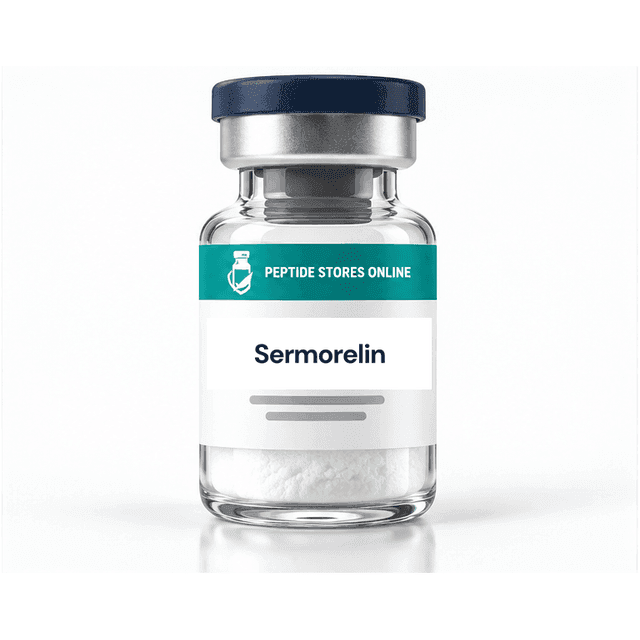
PSO vial render · Scientific images from Wikipedia · Tap to enlarge
Overview

Pharmaceutical drug
Sermorelin acetate, also known as GHRH (1-29), is a peptide analogue of growth hormone-releasing hormone (GHRH) which is used as a diagnostic agent to assess growth hormone (GH) secretion for the purpose of diagnosing growth hormone deficiency. It is a 29-amino acid polypeptide representing the 1–29 fragment from endogenous human GHRH, thought to be the shortest fully functional fragment of GHRH.
Mechanism of Action
Binds GHRH receptors on pituitary somatotrophs, stimulates GH synthesis and release in a physiological pulsatile manner.
What is Sermorelin?
Sermorelin is a synthetic peptide built from the first 29 amino acids of growth hormone-releasing hormone, the natural brain signal for growth hormone release. Researchers use it to study how the pituitary responds with age. In older adults, studies found it raised growth hormone and IGF-1 toward younger levels.
How It Works - Simply Explained
Sermorelin copies the active part of the natural releasing hormone. It binds to receptors on growth hormone-making cells in the pituitary gland and prompts those cells to release the body's own growth hormone in pulses, much as the natural signal does, especially during sleep. The released growth hormone then drives IGF-1 production, mainly in the liver. Because sermorelin works through the pituitary, the body's normal feedback systems stay involved.
What Studies Have Found
Growth hormone and IGF-1 rose in older men
In an early study of older men whose growth hormone output had fallen with age, researchers found that treatment with the GHRH fragment raised peak growth hormone responses and lifted IGF-1 to levels closer to those seen in younger men. Levels stayed above the starting point for a period even after the study treatment ended, which surprised the team.
Corpas E et al., 1992, Journal of Clinical Endocrinology and Metabolism
Five-month study found lean mass and skin changes
In a placebo-controlled study of men and women aged 55 to 71, researchers observed higher growth hormone release in the hours after each study session and higher 12-hour average levels after weeks of treatment. IGF-1 rose within the first weeks. Men gained about 1.26 kg of lean body mass on average, and skin thickness increased in both sexes, while overall body weight and fat mass did not change significantly.
Khorram O et al., 1997, Journal of Clinical Endocrinology and Metabolism, PMID 9141536
Immune markers shifted in aging adults
The same research group then looked at immune function in aging men and women receiving the GHRH fragment. They reported changes in several immune cell measures over the study period, suggesting the growth hormone axis interacts with immune aging. The work was exploratory and small, but it widened sermorelin research beyond body composition.
Khorram O et al., 1997, Journal of Clinical Endocrinology and Metabolism
Nightly study doubled average growth hormone output
In healthy elderly men, researchers reported that average growth hormone concentration over 12 hours roughly doubled during the study period, driven by larger release per pulse rather than more pulses. Growth hormone levels stayed within the normal physiological range in the report, a point the authors highlighted when discussing pituitary-based approaches.
Vittone J et al., 1997, Metabolism
Review framed sermorelin as a pituitary test of reserve
A later clinical review argued sermorelin's main scientific value is that it tests whether the pituitary can still respond: if growth hormone rises, the gland retains capacity and the shortfall lies in the brain signal. That framing still shapes how researchers use GHRH fragments in aging and growth hormone research today.
Walker RF, 2006, Clinical Interventions in Aging
Last updated 2026-10-12. New findings are added as published research appears.
Frequently Asked Questions
What is sermorelin?
Sermorelin is a synthetic peptide matching the first 29 amino acids of human growth hormone-releasing hormone, the smallest fragment that keeps full releasing activity in research. It is sold strictly for laboratory research use and is not for human consumption.
How is sermorelin different from tesamorelin and CJC-1295?
All three prompt the pituitary to release growth hormone through the same receptor family. Sermorelin is the short natural fragment. Tesamorelin is a stabilized full-length version. CJC-1295 is a modified GHRH analogue engineered in research to remain active far longer. Their study histories and stability differ, even though the core signal is similar.
Does sermorelin supply growth hormone directly?
No. Sermorelin is a signal, not growth hormone itself. In studies it prompts pituitary cells to release the body's own growth hormone in pulses, and normal feedback loops remain part of the picture researchers measure.
What did sermorelin studies in older adults find?
Small controlled studies in adults in their 50s to 70s reported higher growth hormone release, higher IGF-1, a modest gain in lean body mass in men, and increased skin thickness. Body weight, fat mass, and testosterone did not change significantly in the best-known five-month study.
Is sermorelin approved for human use?
Sermorelin was historically used as a diagnostic tool in some settings, but the material sold here is a research chemical for laboratory use only. It is not sold as a medicine and is not for human consumption.
Why do researchers still study a peptide from the 1990s?
Because it cleanly answers a basic question: can an aging pituitary still respond to its natural signal? That question underpins modern work on growth hormone decline, sleep-related hormone pulses, and immune aging, so the fragment remains a useful research reference.
What Researchers Are Saying
Community Reports - Not Medical Advice
The following is aggregated from public forums, Reddit, and research communities. These are anecdotal reports from researchers only - not verified clinical data and not a recommendation of any kind.
Sermorelin (also known as GRF 1-29, grf129) is studied within the growth hormone axis and body composition research community. Truncated analogue of endogenous GHRH studied for stimulating pulsatile GH secretion.
Last updated October 28, 2026
Research status: active. Sermorelin appears across growth hormone axis and body composition research forums and academic literature. Researchers note this compound falls in the growth hormone category.
Last updated October 28, 2026
What Do You Think of This Peptide?
Share your opinion or research experience with Sermorelin. Comments are reviewed before appearing.