For Research Use Only | Products on this marketplace are intended for research and laboratory use only.

Hair & SkinLimited Research

AHK-Cu

Also known as: ahkcu · ahk copper · copper tripeptide-3 · alanyl-histidyl-lysine copper · ala-his-lys copper · AHK copper peptide · Copper Tripeptide-3

For in-vitro (laboratory) research purposes only. Not for human or animal consumption.

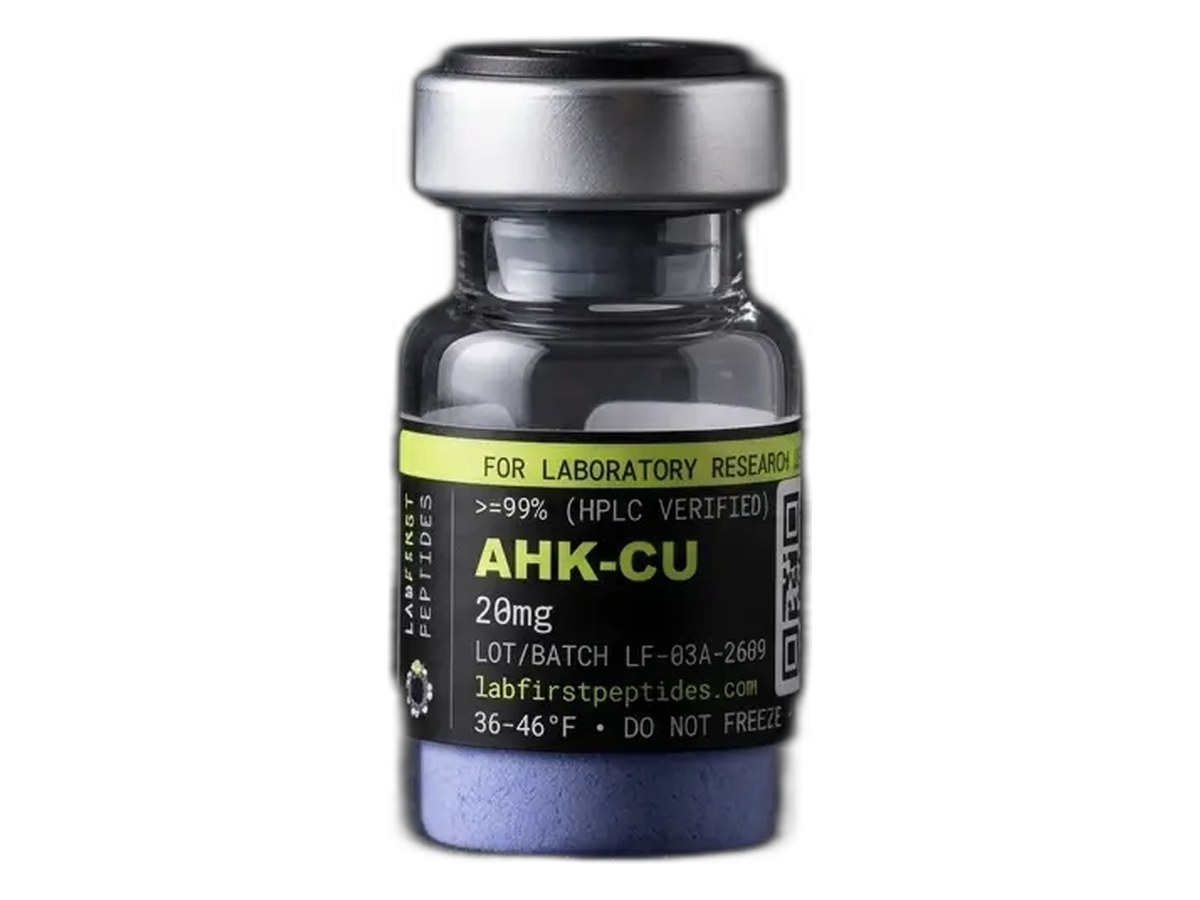
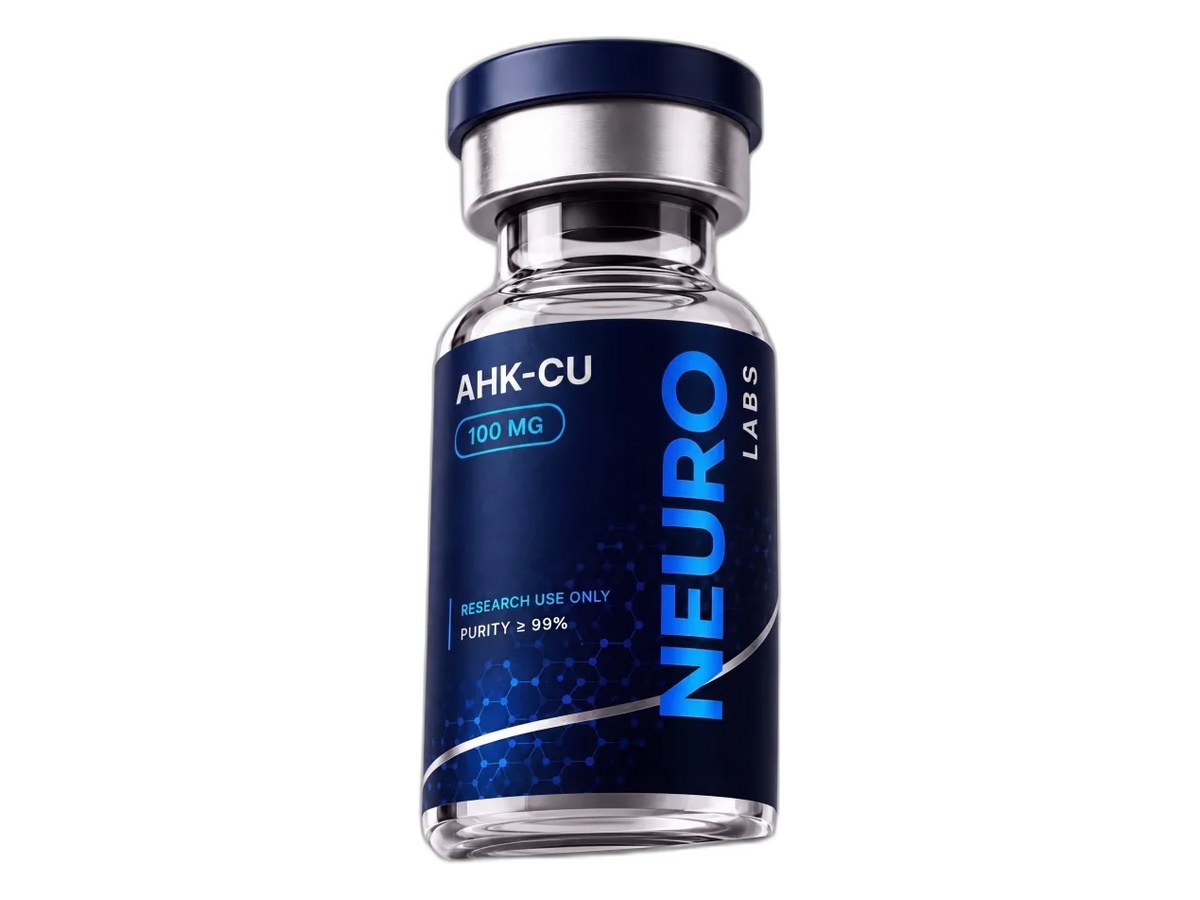
AHK-Cu product image from the marketplace
AHK-Cu 100MG

Neuro Labs

AHK-Cu 100MG

With code:$69.61Regular:$87.01

at Neuro Labs

Save 20% on your first order with code PEPTIDESTOREONLINECOM at checkout.

For in-vitro research use only. Not for human or animal consumption.

AHK-Cu in Our Records

From our own records
10
Active AHK-Cu listings
8
Vendors selling it here
1
Published studies indexed for this compound
1
Verified COA documents on file for this compound

Best for

Researchers and lab buyers comparing verified sellers of AHK-Cu in one place: real prices, working discount codes, and published lab documents, checked before buying on the seller's own site.

Not for

Anyone looking for AHK-Cu for human or animal use, medical advice, or dosing information, or a store that sells and ships peptides directly. This page is research information only.

Counts from Peptide Stores Online records, November 15, 2026. The offer above is the single top offer for AHK-Cu: picked from our own human outbound click records (trailing 12 months) where clicks exist, otherwise the lowest with-code price, and refreshed daily.

Available Forms

TopicalPowder

Research Applications

Skin & Hair

Check independent lab results, free

Finnrick Analytics publishes independent lab test results for peptide products from named vendors, and anyone can check the published results for free.

For in-vitro research use only. Not for human consumption.

1What Is AHK-Cu?

AHK-Cu is the copper complex of the tripeptide alanine-histidine-lysine (Ala-His-Lys), a three-amino-acid chain bound to a copper ion. Researchers study it in laboratory models of hair follicle biology, mainly cultured human dermal papilla cells and isolated human hair follicles. It is a research compound only and is not an approved treatment.

3How It Works

AHK-Cu is studied as a copper-carrying tripeptide. In the laboratory work that defines this compound, the complex was described as a growth factor for various kinds of differentiated cells: it stimulated the proliferation of dermal fibroblasts, raised production of vascular endothelial growth factor (VEGF), and lowered secretion of transforming growth factor-beta1 (TGF-beta1) by dermal fibroblasts. Dermal papilla cells are specialized fibroblasts that help direct hair follicle growth, so researchers tested AHK-Cu directly on those cells and on isolated human hair follicles. AHK-Cu vs GHK-Cu: the two compounds differ by one amino acid. AHK-Cu starts with alanine (Ala-His-Lys), while GHK-Cu starts with glycine (Gly-His-Lys). That single difference makes them separate compounds with separate published records, not interchangeable names for one material. GHK-Cu carries the broader record, with decades of published work on skin regeneration and wound healing in laboratory, animal, and some human skin studies. AHK-Cu carries the narrower record, focused mainly on hair follicle and dermal papilla cell models in vitro. Findings for one compound should not be read as findings for the other. Both are research compounds, and neither is an approved treatment.

4What Researchers Have Observed

🔬
Hair Follicles and Dermal Papilla Cells in the Laboratory
In the study most cited for this compound (Pyo et al., 2007, Archives of Pharmacal Research), AHK-Cu stimulated elongation of human hair follicles in ex vivo culture and proliferation of cultured dermal papilla cells in vitro. The authors proposed the effect may work through stimulating proliferation and reducing apoptosis of dermal papilla cells.
🧪
Survival Signals Inside Dermal Papilla Cells
The same laboratory study found AHK-Cu raised the Bcl-2/Bax ratio and reduced cleaved caspase-3 and PARP in cultured dermal papilla cells. The direct count of apoptotic cells fell, but that decrease was not statistically significant, a limit the authors reported alongside the marker results.
🧬
Structure of the AHK Tripeptide, Modeled in Silico
A 2020 computational study (Kecel-Gunduz et al., The Online Journal of Science and Technology) used quantum mechanical calculations, molecular dynamics in water, and molecular docking to characterize the structure and binding properties of Ala-His-Lys. It is computer modeling work and adds structural context, not cell or tissue evidence.
⚖️
AHK-Cu vs GHK-Cu: Two Different Published Records
Reviews of GHK-Cu (Pickart and Margolina, 2018, International Journal of Molecular Sciences) describe a wider record covering collagen and elastin synthesis, fibroblast function, wound healing in animal models, gene expression, and human skin studies. AHK-Cu has a narrower, follicle-focused record. Skin findings for GHK-Cu should not be presented as findings for AHK-Cu.

These findings are from pre-clinical and early-phase research. Results in human subjects have not been established.

5Published Research - Plain English Summaries

The studies below have been published in peer-reviewed journals. Summaries are written in plain language - no jargon. Citations are provided as text only.

in vitro study

The effect of tripeptide-copper complex on human hair growth in vitro

Key finding: In laboratory culture, AHK-Cu stimulated elongation of isolated human hair follicles and proliferation of cultured dermal papilla cells.

Researchers tested AHK-Cu, the copper complex of L-alanyl-L-histidyl-L-lysine, on human hair follicles in ex vivo culture and on cultured human dermal papilla cells in vitro. AHK-Cu stimulated elongation of the cultured follicles and proliferation of the dermal papilla cells. It raised the Bcl-2/Bax ratio and reduced cleaved caspase-3 and PARP, while the fall in apoptotic cell counts was not statistically significant. The authors proposed the effect may occur through stimulating proliferation and precluding apoptosis of dermal papilla cells. Laboratory models only.

Pyo HK, Yoo HG, Won CH, Lee SH, Kang YJ, Eun HC, Cho KH, Kim KH · 2007 · Archives of Pharmacal Research · PMID 17703734

6Common Questions

What is AHK-Cu?↓
AHK-Cu is the copper complex of the tripeptide alanine-histidine-lysine (Ala-His-Lys). It is a laboratory research compound studied mainly in hair follicle and dermal papilla cell models. It is sold strictly for laboratory research use and is not approved for human consumption.
How is AHK-Cu different from GHK-Cu?↓
The sequences differ by one amino acid. AHK-Cu is alanine-histidine-lysine; GHK-Cu is glycine-histidine-lysine. Their published records also differ. GHK-Cu has the broader literature, spanning skin regeneration and wound healing research over decades. AHK-Cu has a narrower record focused on hair follicle and dermal papilla cells in vitro. They are separate compounds, and results for one do not establish results for the other.
What models has AHK-Cu been studied in?↓
Published AHK-Cu work is laboratory based. The central study used human hair follicles in ex vivo culture and cultured human dermal papilla cells in vitro. A later study modeled the AHK tripeptide in silico, using computer simulations of its structure and binding properties. No published randomized human trial of AHK-Cu was identified in the sources reviewed for this guide.
Is AHK-Cu approved as a treatment?↓
No. AHK-Cu is not an approved drug or treatment. It is available only as a research compound for laboratory research, which is why every page on this site carries the research-use-only notice.
Does AHK-Cu grow hair?↓
The published evidence does not establish that. One laboratory study found AHK-Cu stimulated elongation of isolated human hair follicles in culture and proliferation of cultured dermal papilla cells. That is a cell and tissue culture finding. It is not evidence from a clinical trial in people, and this site makes no efficacy claim for AHK-Cu.

Related Compounds

All content on this page is for in-vitro research purposes only. Not intended for human or animal use. Consult a licensed professional before handling research chemicals. No content on this page constitutes medical advice or a treatment recommendation.

← Back to Peptide Library

All products listed on Peptide Stores Online are for in-vitro laboratory and educational research purposes only. Not for human or animal consumption. Not evaluated by the Food and Drug Administration. Not intended to diagnose, treat, cure, or prevent any disease or condition. All sellers and buyers agree to full research-use-only terms at account creation. Peptide Stores Online assumes no liability for misuse of any product listed on this platform.