For Research Use Only | Products on this marketplace are intended for research and laboratory use only.

Tissue RepairActive Research

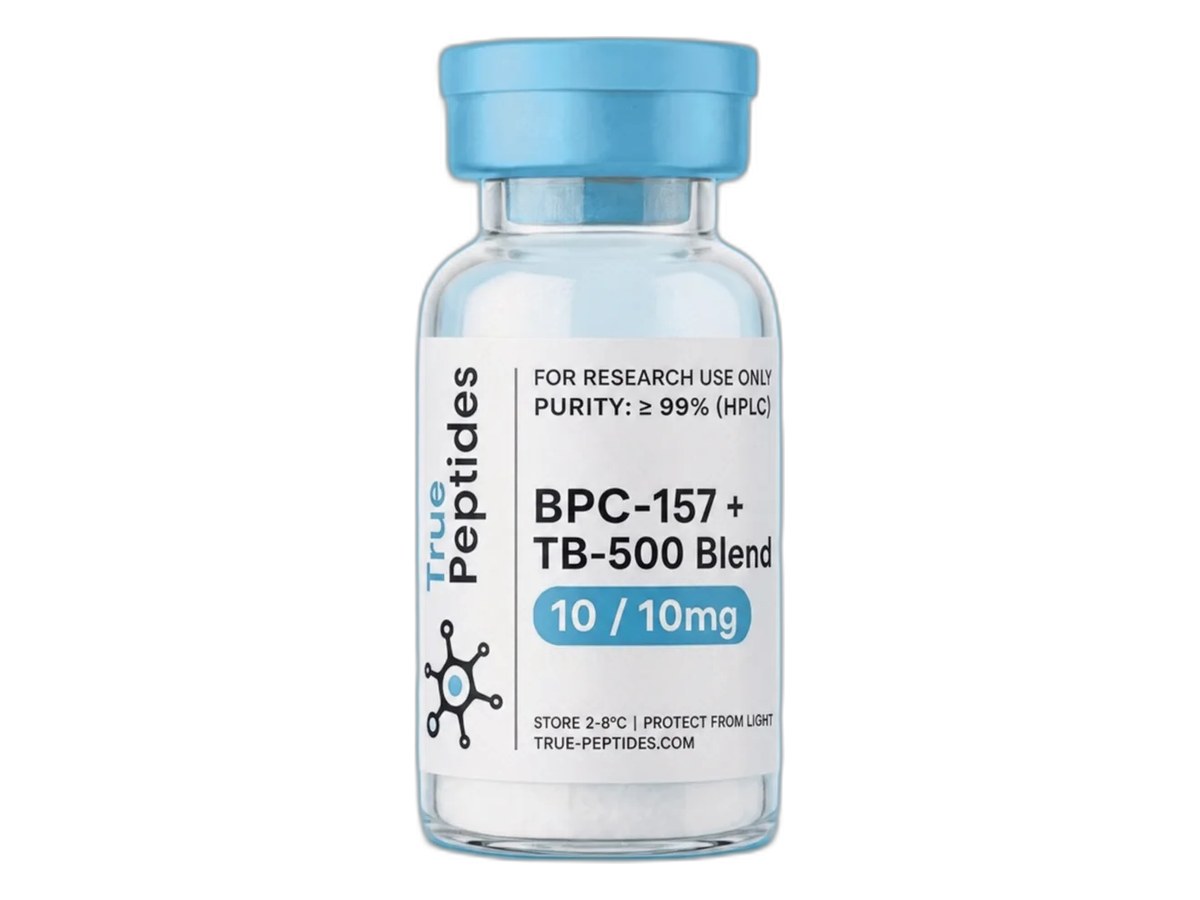
BPC-157 / TB-500

Also known as: bpc-157 tb-500 blend · bpc 157 tb 500 · bpc-157 + tb-500

For in-vitro (laboratory) research purposes only. Not for human or animal consumption.

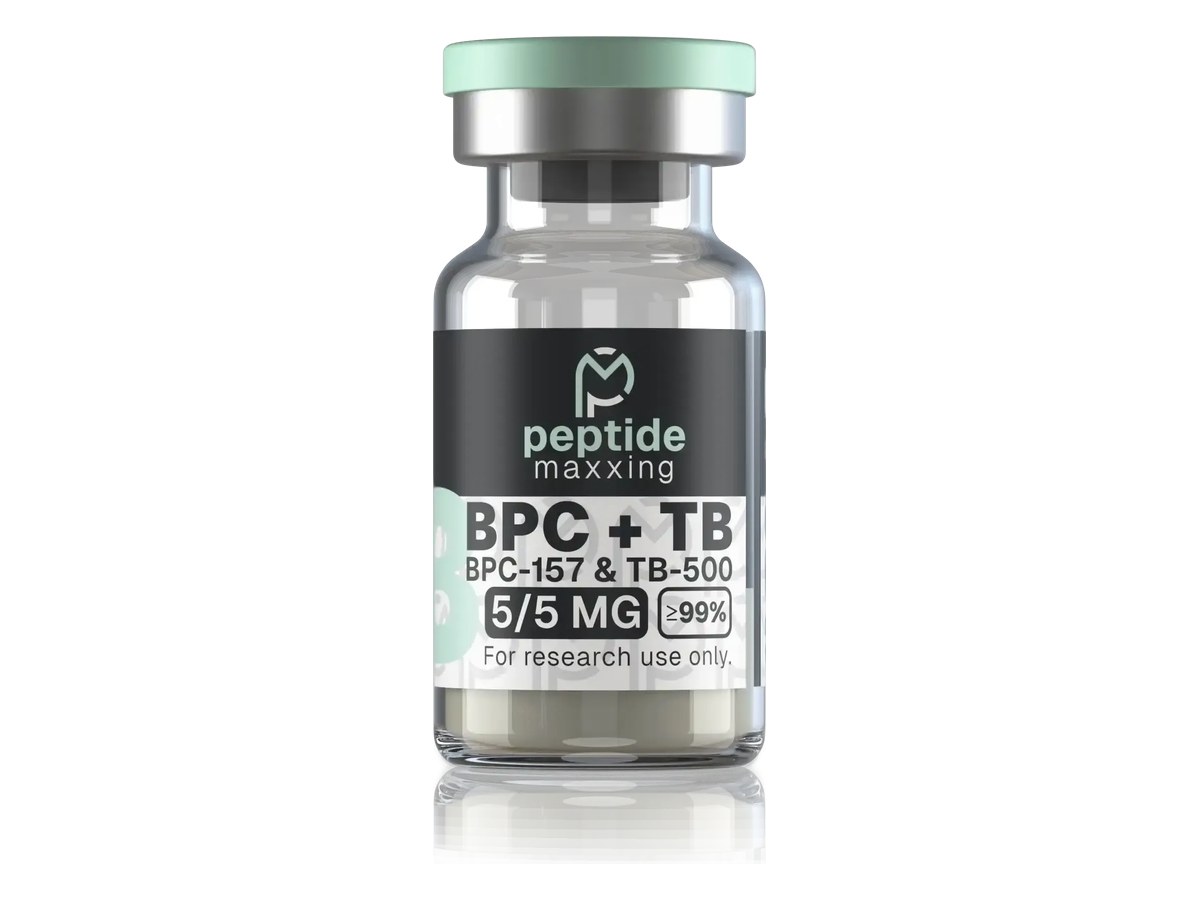
BPC-157 / TB-500 product image from the marketplace
BPC-157 + TB-500 10MG (5MG/5MG)

Peptide Maxxing

BPC-157 + TB-500 10MG (5MG/5MG)

With code:$55.25Regular:$65.00

at Peptide Maxxing

Save 15% with code PEPTIDESTOREONLINECOM at checkout.

For in-vitro research use only. Not for human or animal consumption.

BPC-157 / TB-500 in Our Records

From our own records
39
Active BPC-157 / TB-500 listings
22
Vendors selling it here
1
Published studies indexed for this compound
4
Verified COA documents on file for this compound

Best for

Researchers and lab buyers comparing verified sellers of BPC-157 / TB-500 in one place: real prices, working discount codes, and published lab documents, checked before buying on the seller's own site.

Not for

Anyone looking for BPC-157 / TB-500 for human or animal use, medical advice, or dosing information, or a store that sells and ships peptides directly. This page is research information only.

Counts from Peptide Stores Online records, November 15, 2026. The offer above is the single top offer for BPC-157 / TB-500: picked from our own human outbound click records (trailing 12 months) where clicks exist, otherwise the lowest with-code price, and refreshed daily.

Available Forms

InjectablePowder

Research Applications

Tissue & Wound HealingAnti-Inflammatory

Check independent lab results, free

Finnrick Analytics publishes independent lab test results for peptide products from named vendors, and anyone can check the published results for free.

For in-vitro research use only. Not for human consumption.

1What Is BPC-157 / TB-500?

The BPC-157 / TB-500 blend pairs two of the most studied tissue-repair research peptides in a single vial. BPC-157 is a 15-amino-acid peptide modeled on a protective protein found in human stomach fluid. TB-500 is a synthetic fragment of thymosin beta-4, a protein found in nearly every cell. Vendors typically sell the pair pre-mixed at a fixed ratio, most often 5 mg of each in a 10 mg vial or 10 mg of each in a 20 mg vial, so laboratories can study the two side by side. It is sold strictly for laboratory research and is not approved for human use.

2History & Discovery

The blend exists because two separate research literatures grew up around the same repair questions. BPC-157 research began in the early 1990s at the University of Zagreb, where Predrag Sikiric and colleagues studied a protective factor from gastric juice across tendons, muscles, gut, and nerves in animal models. Thymosin beta-4, the parent protein of TB-500, was studied over the same decades for actin regulation, cell migration, and wound repair in skin, eye, and heart models. As both compounds became staples of tissue-repair research, vendors began offering them pre-mixed in one vial at a fixed ratio. The published record still covers the pair mostly separately: a single controlled rat study has tested the combination directly.
3How It Works

The two components reach tissue repair from different directions, which is the rationale for the pairing. BPC-157 is associated in laboratory studies with new blood vessel growth, growth-factor pathways, nitric oxide signaling, and protection of the gut lining. TB-500 is tied to actin regulation: it helps repair cells migrate to an injury site, and it is also linked to vessel growth and calmer inflammatory signaling. Researchers study the pair side by side because the two records overlap on repair questions without sharing one mechanism. That complementarity is a rationale drawn from the separate literatures, not a proven combined effect.

🦴
Tendons & Ligaments
The tissue class used in the one controlled study of the pair, a 2026 rat Achilles tendon repair experiment
🩸
Blood Vessel Formation
Both single-compound literatures report angiogenesis findings in animal and cell models
🧫
Cell Migration
TB-500 research centers on actin regulation, the machinery repair cells use to reach an injury site
🧪
Gut Lining
BPC-157 began as a gastric protective peptide, and gut-lining protection anchors its research record

4What Researchers Have Observed

🦴
The One Direct Test of the Pair
A 2026 rat study repaired severed Achilles tendons and compared control, BPC-157 alone, TB-500 alone, and the two combined. Both single compounds improved several healing measures against control, but the authors reported that combined treatment did not confer additional benefits compared to either agent alone.
🏃
BPC-157 Tendon Record
In the best-known BPC-157 experiment, treated rat Achilles tendons developed better-organized collagen and withstood significantly more pulling force before failing again. The full single-compound record is in the BPC-157 guide.
❤️
TB-500 Heart Record
In a landmark study of the parent protein thymosin beta-4, treated mice with heart injuries showed awakened repair cells and significantly better pumping function. The full single-compound record is in the TB-500 guide.
📚
What the Record Does Not Contain
Beyond the single rat experiment, the published record covers each compound separately, almost entirely in animal and cell models. There is no controlled human trial of the combination, and claims about the blend itself go past what the literature has tested.

These findings are from pre-clinical and early-phase research. Results in human subjects have not been established.

5Published Research - Plain English Summaries

The studies below have been published in peer-reviewed journals. Summaries are written in plain language - no jargon. Citations are provided as text only.

animal study

Effects of BPC-157 and TB-500 on Achilles tendon healing in rats: A histopathological and biomechanical study

Bicer O, Adanir O, Guleryuz Y, Balci EC, Dincel YM, Yenigun MY, Aydin C, Bayrak BY · 2026 · Joint diseases and related surgery · PMID 42542926

6Common Questions

What is in the BPC-157 / TB-500 blend?↓
Two research peptides in one vial: BPC-157, a 15-amino-acid peptide modeled on a stomach protective protein, and TB-500, a synthetic fragment of thymosin beta-4. Marketplace listings most often pair them at equal amounts, 5 mg of each in a 10 mg vial or 10 mg of each in a 20 mg vial.
How does the blend differ from buying the two separately?↓
The blend fixes the ratio in advance and puts both peptides in a single vial, which keeps a side-by-side study simple. Buying the compounds separately lets a laboratory vary each one independently and run single-compound control groups from the same materials. The peptides themselves are the same either way.
Has the combination itself been studied?↓
Once, in a controlled animal experiment. A 2026 rat Achilles tendon study included a combined BPC-157 and TB-500 group and reported no added benefit over either peptide alone. Everything else in the published record studies each compound on its own, and there is no controlled human trial of the pair.
Is the blend the same as GLOW or KLOW?↓
No. This blend contains only BPC-157 and TB-500. Marketplace listings for GLOW add GHK-Cu as a third peptide, and KLOW listings add both GHK-Cu and KPV, for a total of four. The compound names on each listing state exactly what is inside.
Is the BPC-157 / TB-500 blend approved by the FDA?↓
No. Neither BPC-157 nor TB-500 is FDA approved on its own, and the combined product is not approved either. It is sold strictly as a research chemical for in-vitro laboratory research, not for human consumption.

Related Compounds

All content on this page is for in-vitro research purposes only. Not intended for human or animal use. Consult a licensed professional before handling research chemicals. No content on this page constitutes medical advice or a treatment recommendation.

← Back to Peptide Library

All products listed on Peptide Stores Online are for in-vitro laboratory and educational research purposes only. Not for human or animal consumption. Not evaluated by the Food and Drug Administration. Not intended to diagnose, treat, cure, or prevent any disease or condition. All sellers and buyers agree to full research-use-only terms at account creation. Peptide Stores Online assumes no liability for misuse of any product listed on this platform.